
Home / Root Canals
Root Canals
A toothache doesn't have to mean losing your tooth. At North Pointe Dental Center, we provide gentle root canal treatment to patients throughout North Fort Myers and Lee County, relieving pain and saving infected teeth so you can keep your natural smile.
Root Canals in North Fort Myers, FL
A toothache doesn't have to mean losing your tooth. At North Pointe Dental Center, we provide gentle root canal treatment to patients throughout North Fort Myers and Lee County, relieving pain and saving infected teeth so you can keep your natural smile.
What Is a Root Canal?
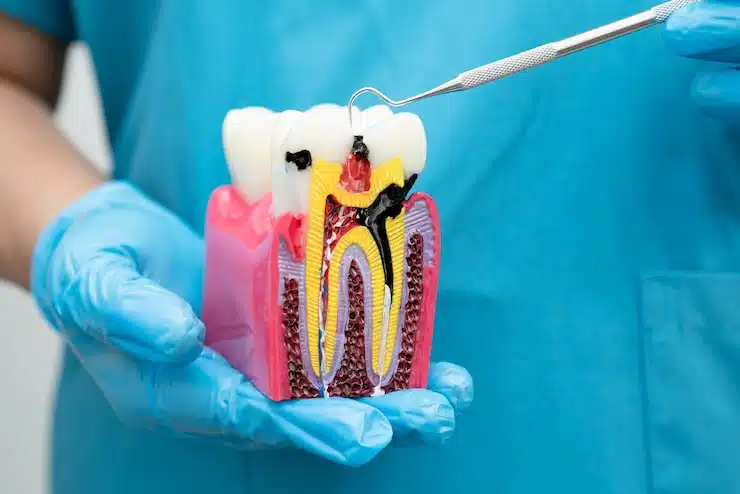
A root canal is a dental procedure that removes infected or damaged tissue from inside a tooth. Deep within each tooth lies the pulp—a soft tissue containing nerves, blood vessels, and connective tissue. When the pulp becomes infected or inflamed due to decay, cracks, or trauma, a root canal removes the damaged tissue, cleans and disinfects the inner chamber, and seals the tooth to prevent future infection.
Despite its reputation, modern root canal treatment is comfortable and comparable to getting a filling. The procedure actually relieves pain rather than causing it—the infection is what hurts, and removing it brings relief. Root canals save millions of teeth each year that would otherwise need to be extracted.
Why Would I Need a Root Canal?
The pulp inside your tooth can become infected or inflamed for several reasons:
Deep Tooth Decay
When a cavity goes untreated, bacteria can work through the enamel and dentin to reach the pulp, causing infection.
Cracked or Chipped Tooth
A crack or chip can create a pathway for bacteria to enter the pulp, even if the damage isn’t visible.
Trauma or Injury
A blow to the tooth can damage the pulp even without visible cracks. Sometimes pulp damage from trauma doesn’t cause symptoms until years later.
Repeated Dental Procedures
Multiple procedures on the same tooth can stress the pulp and eventually cause it to fail.
Large Fillings
Extensive fillings that come close to the pulp can irritate it over time, leading to inflammation and infection.
Faulty Crowns
A crown that doesn’t fit properly can allow bacteria to seep underneath and infect the pulp.
Without treatment, an infected pulp can lead to abscess formation, bone loss, and the spread of infection to surrounding teeth and tissues. A root canal eliminates the infection and saves your natural tooth.
Signs You May Need a Root Canal
Sometimes an infected tooth causes no symptoms, which is why regular dental exams are important. However, common signs that you may need a root canal include:
- Severe toothache, especially when chewing or applying pressure
- Prolonged sensitivity to hot or cold that lingers after the source is removed
- Darkening or discoloration of the tooth
- Swelling and tenderness in nearby gums
- A persistent pimple or bump on the gums (abscess)
- Throbbing pain that may radiate to your jaw, ear, or head
- Pain that wakes you up at night
- Swelling in your face or neck
- A bad taste in your mouth
- Fever (indicating spreading infection)
If you experience any of these symptoms, contact North Pointe Dental Center promptly. Early treatment can prevent the infection from spreading and increase the chances of saving your tooth.
Benefits of Root Canal Treatment
Save Your Natural Tooth
Nothing looks, feels, or functions quite like your natural tooth. A root canal allows you to keep your tooth rather than having it extracted and replaced.
Relieve Pain
Contrary to popular belief, root canals relieve pain rather than cause it. The infected pulp is what’s causing your discomfort, and removing it brings relief.
Prevent Infection Spread
An untreated tooth infection can spread to other teeth, your jawbone, and even other parts of your body. A root canal eliminates the source of infection.
Maintain Your Smile
Keeping your natural tooth preserves your smile’s appearance. After a root canal and crown, your tooth looks completely natural.
Protect Your Bite
Extracting a tooth can cause neighboring teeth to shift, affecting your bite and jaw alignment. Saving the tooth with a root canal prevents these complications.
Efficient Chewing
Your natural tooth allows you to chew and bite normally, maintaining proper function and nutrition.
Cost-Effective
While a root canal requires an investment, it’s often less expensive in the long run than extraction followed by an implant, bridge, or other tooth replacement.
High Success Rate
Root canal treatment has a success rate of over 95%, and many treated teeth last a lifetime with proper care.

The Root Canal Process at North Pointe Dental Center
Root canal treatment at our North Fort Myers office is typically completed in one or two appointments, depending on the complexity of your case.
Diagnosis & X-Rays
We begin by examining your tooth and taking X-rays to assess the extent of infection and the shape of your root canals. This helps us plan your treatment and determine if a root canal is the right solution.
Anesthesia
We administer local anesthesia to completely numb the tooth and surrounding area. You’ll feel pressure during the procedure but no pain. For anxious patients, sedation options are available to help you relax.
Isolation
We place a small rubber dam around the tooth to keep it clean and dry during the procedure, protecting it from saliva and bacteria.
Access Opening
We create a small opening in the crown of the tooth to access the pulp chamber and root canals.
Pulp Removal
Using specialized instruments, we carefully remove the infected or inflamed pulp tissue from the chamber and root canals. This eliminates the source of your pain and infection.
Cleaning & Shaping
We thoroughly clean the inside of the tooth and shape the canals to prepare them for filling. Antimicrobial solutions are used to disinfect the entire canal system.
Filling the Canals
Once cleaned and shaped, we fill the canals with a biocompatible rubber-like material called gutta-percha, then seal the opening with adhesive cement to prevent future infection.
Temporary or Permanent Restoration
Depending on your situation, we may place a temporary filling to protect the tooth until your permanent restoration is ready, or we may complete the restoration in the same visit.
Crown Placement
Most teeth that have had root canal treatment need a crown to restore strength and protect against fracture. We’ll take impressions for your custom crown, which is typically placed at a follow-up appointment. Learn more about our Emax crowns.
What to Expect After a Root Canal
Immediately After
- Numbness will wear off in a few hours
- Avoid eating until the anesthesia subsides to prevent biting your cheek or tongue
- Some tenderness is normal and should subside within a few days
- Take prescribed or over-the-counter pain medication as needed
First Few Days
- Mild discomfort or sensitivity is normal, especially when chewing
- Avoid chewing on the treated tooth until your permanent crown is placed
- Continue your normal brushing and flossing routine
- Take all prescribed antibiotics as directed
Long-Term
- Once your crown is placed, your tooth should feel and function like any other tooth
- Maintain regular dental checkups so we can monitor the treated tooth
- Practice good oral hygiene to prevent future problems
Most patients return to normal activities the day after their root canal. If you experience severe pain, swelling, or fever, contact our office immediately.
Root Canal vs. Tooth Extraction
When faced with a severely infected tooth, you have two options: root canal treatment or extraction. Here’s how they compare:
| Factor | Root Canal | Extraction |
|---|---|---|
| Preserves Natural Tooth | Yes | No |
| Treatment Time | 1 appointments | 1 appointment (plus replacement) |
| Recovery | Minimal, 1-2 days | Several days to a week |
| Cost | Moderate | Lower initially, but replacement adds cost |
| Adjacent Teeth | Not affected | May shift into gap |
| Bone Preservation | Maintains bone | Bone loss occurs without replacement |
| Chewing Function | Fully restored after tooth is rebuilt with a post and crown | Compromised until replaced |
| Appearance | Natural | Gap or artificial replacement |
| Long-Term Outcome | 95%+ success rate, can last lifetime | Requires ongoing replacement maintenance |
While extraction may seem simpler, keeping your natural tooth is almost always the better choice when possible. A root canal followed by a crown preserves your tooth’s function and appearance while avoiding the complications that come with tooth loss.

Common Root Canal Myths
Myth: Root canals are extremely painful. Fact:
Modern root canal treatment is virtually painless thanks to advanced anesthesia and techniques. Most patients compare the experience to getting a filling. The infection before treatment is what causes pain—the root canal relieves it.
Myth: It's better to just pull the tooth. Fact:
Saving your natural tooth is almost always preferable. Extracted teeth must be replaced to prevent shifting, bone loss, and bite problems. Replacements like implants or bridges are more expensive and require additional procedures.
Myth: Root canals cause illness. Fact:
This myth stems from debunked research from nearly a century ago. Modern science has found no valid link between root canal treatment and disease elsewhere in the body. Root canals are safe and effective.
Myth: Root canals require many appointments. Fact:
Most root canals are completed in one or two visits. Advances in technology and techniques have made treatment faster and more efficient than ever.
Myth: If the tooth doesn't hurt, I don't need a root canal. Fact:
Not all infected teeth cause pain. Sometimes the nerve dies, eliminating pain while the infection continues to spread. Regular dental exams can detect problems before they cause symptoms.
Myth: Root canals don't last. Fact:
With proper care, a tooth treated with a root canal can last a lifetime. Success rates exceed 95%, and most treated teeth function normally for decades.
Advanced Root Canal Technology
At North Pointe Dental Center, we use modern technology to make your root canal treatment more comfortable, efficient, and successful:
- Digital X-Rays — Provide detailed images of your tooth and root structure with minimal radiation exposure, helping us diagnose problems accurately and plan treatment precisely.
- Electronic Apex Locators — Allow us to measure root canal length precisely, ensuring thorough cleaning and filling while preserving healthy tissue.
- Rotary Instruments — Flexible nickel-titanium files clean and shape canals more efficiently and comfortably than traditional hand files.
- Irrigation — Enhances cleaning by flushing canals to thoroughly disinfect the tooth interior.
When a Root Canal Isn't Enough
In some cases, standard root canal treatment may not be sufficient to save a tooth:
Retreatment
If a previously treated tooth becomes reinfected, we may be able to retreat it by removing the old filling material, recleaning the canals, and resealing the tooth.
Apicoectomy
If infection persists at the root tip after treatment or retreatment, a minor surgical procedure called an apicoectomy can remove the infected tissue and seal the root end.
Extraction
In rare cases where the tooth cannot be saved despite our best efforts—such as when there’s a severe fracture, extensive bone loss, or inadequate remaining tooth structure—extraction may be the only option. We’ll discuss tooth replacement options to restore your smile. Learn more about our tooth extractions.
Your North Fort Myers Root Canal Dentist
North Pointe Dental Center proudly serves patients from North Fort Myers, Fort Myers, Cape Coral, Lehigh Acres, and nearby Southwest Florida communities. Our gentle approach and modern techniques make root canal treatment a comfortable experience. We take time to explain the procedure, answer your questions, and ensure you feel at ease throughout your treatment.
Do You Have Questions?
Frequently Asked Questions About Root Canals
Does a root canal hurt?
No. We use local anesthesia to completely numb your tooth and surrounding tissues before beginning treatment. Most patients feel only pressure during the procedure, not pain. The root canal actually relieves the pain caused by the infection. Afterward, you may experience mild tenderness for a few days, which is easily managed with over-the-counter pain relievers.
How long does a root canal take?
Most root canals take 60 to 90 minutes and can be completed in a single appointment. Complex cases involving multiple canals or severe infection may require a second visit. We’ll give you a time estimate based on your specific situation during your consultation.
How much does a root canal cost in North Fort Myers?
The cost depends on which tooth is affected and the complexity of the case. Front teeth with single roots cost less than molars with multiple roots. Most dental insurance plans cover a significant portion of root canal treatment. We’ll provide a detailed estimate and discuss payment options before beginning treatment.
Is it better to get a root canal or pull the tooth?
In most cases, saving your natural tooth with a root canal is the better choice. Your natural tooth functions better than any replacement, and extraction leads to bone loss, shifting teeth, and the need for costly replacement options like implants or bridges. We only recommend extraction when a tooth truly cannot be saved.
Do I need a crown after a root canal?
Usually, yes. Root canal treatment removes the pulp that provides moisture to the tooth, making it more brittle over time. A crown protects the tooth from fracture and restores its full strength and function. Front teeth with minimal damage may sometimes be restored with a filling alone, but molars and premolars almost always need crowns.
How long does a root canal last?
With proper care, a tooth treated with a root canal can last a lifetime. Success rates exceed 95%. The key to longevity is getting a proper restoration (usually a crown) after treatment and maintaining good oral hygiene and regular dental checkups.
What happens if I don't get a root canal?
Without treatment, the infection will continue to spread. You may develop a painful abscess, experience bone loss around the tooth, and eventually lose the tooth entirely. In severe cases, the infection can spread to other parts of your body, potentially becoming life-threatening. A root canal eliminates the infection and saves your tooth.
Can I eat after a root canal?
Wait until the numbness wears off before eating to avoid accidentally biting your cheek or tongue. Start with soft foods and avoid chewing on the treated tooth until your permanent crown is placed. Once your crown is in place, you can eat normally.
Will I need time off work after a root canal?
Most patients return to work or normal activities the same day or the day after their root canal. The procedure itself isn’t debilitating, and any mild discomfort is easily managed with over-the-counter pain relievers. If your job involves strenuous physical activity, you may want to take it easy for a day.
Why does my tooth need a root canal if it doesn't hurt?
Not all infected teeth cause pain. Sometimes the nerve dies, which eliminates pain signals even though the infection remains active. The infection can still spread to surrounding bone and tissue, causing serious problems. X-rays and clinical examination can detect infections that aren’t causing symptoms.
How do I know if my root canal failed?
Signs of a failed root canal include return of pain or sensitivity, swelling, a pimple on the gums near the tooth, or discoloration. Sometimes failure is detected only on X-rays during routine exams. If you experience any symptoms after a root canal, contact our North Fort Myers office. Many failed root canals can be successfully retreated.
Are root canals safe?
Yes. Root canal treatment is one of the safest and most common dental procedures, with millions performed successfully each year. The myth that root canals cause systemic illness has been thoroughly debunked by modern research. Keeping an infected tooth untreated poses far greater health risks than having a root canal.
What's the difference between a root canal and a filling?
A filling repairs damage to the outer layers of a tooth (enamel and dentin) caused by decay. A root canal treats infection or damage that has reached the innermost part of the tooth (the pulp). Fillings are appropriate for cavities that haven’t reached the pulp; root canals are necessary when the pulp is affected.
Can all teeth have root canals?
Most teeth can be treated with root canals, but some factors may make treatment difficult or impossible. These include severely curved or calcified canals, extensive root fractures, or inadequate remaining tooth structure. We’ll evaluate your tooth thoroughly and discuss whether a root canal is feasible or if another treatment is recommended.
How can I prevent needing a root canal?
Good oral hygiene is your best defense. Brush twice daily, floss once a day, and visit North Pointe Dental Center regularly for checkups and cleanings. Treating cavities early, before they reach the pulp, prevents the need for root canals. Wearing a mouthguard during sports and avoiding chewing on hard objects also protects your teeth from trauma.
Schedule Your Root Canal Consultation in North Fort Myers
Experiencing tooth pain or think you might need a root canal? Contact North Pointe Dental Center today to schedule an evaluation at our North Fort Myers office. Our gentle, experienced team will diagnose your condition, explain your options, and provide comfortable treatment to save your tooth and relieve your pain.
Call us today to get started.